
Call us now on 01356628560
Call us now on 01356628560
Featured in The Herald
The UK’s energy transition is in a precarious position and investors know it.
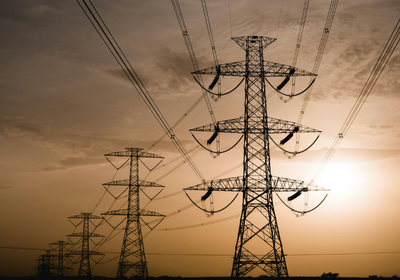
Seagreen, Scotland’s largest offshore wind farm, was recently revealed to have been paid to switch off more than 70% of the time. In the last financial year, £2.7 billion in constraint payments were made by the national grid, money paid to generators not to generate. Why? Because we lack the infrastructure to move and store clean energy.
This isn’t just an engineering oversight. It’s a strategic failure and it's costing investor confidence, clean energy and momentum towards net zero.
At the centre of the issue is storage. The grid is fundamentally unbalanced and heavily reliant on wind without the flexibility to capture and shift energy when it’s not needed. That’s why batteries – at domestic and industrial scale – must sit at the heart of UK energy policy and infrastructure planning. But they don’t.
The Government’s new Industrial Strategy highlights this disconnect. It promises cheaper energy for 7,000 businesses but lacks a serious plan for infrastructure. It fails to link growing solar and battery retrofitting to the Future Homes Standard or map out evolving Scottish Home Standards. It promises, but it doesn’t plan.
Energy storage isn’t optional, it’s essential. After more than 30 years in roofing and renewables, I’ve seen how solar can transform how homes, farms and businesses use energy. Everyone should be able to generate, store, sell and buy energy at the right time and at the right price.
Yet homes are still built like this future doesn’t exist. Why aren’t we mandating cabling for EVs, solar PV and battery-ready infrastructure in new homes, knowing they’ll last over 50 years? A decade on from the founding of Solar Energy Scotland, we still have no national solar strategy. We are falling behind Europe and it shows.
Other countries are acting. The EU is considering restricting cross-border energy sales to keep its grid balanced. Scotland hosts most of the UK’s proposed pumped hydro sites, yet none are under construction. The opportunity is there; we just lack joined-up thinking.
Instead of storing surplus energy, we pay wind farms to shut down. We could be pumping it into batteries, feeding it into hydro schemes and enabling local users to consume it when demand is high. The technology exists. What’s missing is policy alignment and investment certainty.
And investors are noticing. The lukewarm response to the Crown Estate’s seabed leasing round off Cornwall is a clear signal that confidence is slipping. Investment requires clarity, consistency and cohesion, not contradiction.
Solar, by contrast, is ready. It’s fast to install, cost-effective and, when combined with batteries, is a reliable source of local clean power. For many farms and homeowners, solar is a crop they can grow, store and sell. But the system puts up barriers where there should be incentives.
The shift from fossil fuels was always inevitable. But without storage, without integration and without a proper plan, it won’t be affordable or investable.
If we’re serious about a clean, balanced energy future, we must stop treating storage as an afterthought. Without it, there is no strategy.
Tel: 01356628560
Email: enquiries@forstergroup.co.uk
Sectors | About Us | Privacy Policy
© 2024 Forster Group. All Rights Reserved.