
Call us now on 01356628560
Call us now on 01356628560
Featured in Project Scotland
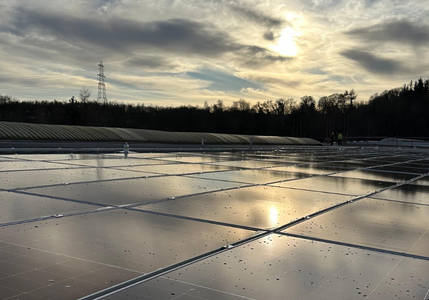
Automatic doors specialist Record UK has completed a 288 kWp rooftop solar PV system at its headquarters and main production facility in Blantyre.
Delivered by Forster Group, the installation is tipped to generate 227,400 kWh of clean electricity annually , reducing 50,658 kg of CO2 emissions in year one alone.
As Record UK’s core manufacturing hub, the Blantyre facility plays a key role in producing the company’s automated door systems. Housing CNC machinery, fabrication, testing, and assembly, the site operates with naturally high electrical demand typical of industrial manufacturing. This made it the ideal location for a large solar deployment capable of offsetting around 52% of annual electricity consumption.
“This is our largest energy consuming site, which meant it offered the greatest operational and sustainability impact,” explained James Simpson, supply chain director at Record UK. “Solar is a long-term investment that strengthens our resilience, reduces our exposure to volatile energy markets, and supports our commitment to responsible, low carbon manufacturing.”
As part of the ASSA ABLOY Group, Record UK contributes to science based emissions reduction targets. Solar directly reduces Scope 2 emissions and supports the company’s sustainability focused product philosophy. The move is also designed to future-proof the firm against energy price volatility and reduce operational carbon footprint.
Record UK selected Forster Group following a competitive tender process.
“We’re proud to support Record UK on their journey toward a lower-carbon future,” said John Forster, founder and chair of Forster Group. “From the outset, they were clear they wanted a solution that would fundamentally transform the way they power their operations.
“By making use of the roof above their facility, they’ve converted existing space into a long-term source of clean, reliable energy.
“Projects like this demonstrate how Scotland’s manufacturers can take ownership of their energy future, reducing emissions, cutting costs and building resilience. The solar opportunity for the sector is clear with its low cost and rapid pay-back.”
Record UK noted that Forster Group’s responsiveness, transparency, and willingness to design a system tailored specifically to the Blantyre site made them the strongest technical fit.
Despite the site’s high levels of daily activity, the installation was said to have been delivered ‘safely, efficiently and with minimal disruption’. Close coordination allowed the factory to operate normally throughout, with no significant challenges encountered.
“The whole process was hassle-free and well managed, with clear communication at every stage,” added James Simpson. “While we’re still tracking long-term financial performance, the system has already delivered strong, reliable energy generation since going live. Integration with our wider facility infrastructure was seamless.”
The installation has already helped increase internal awareness of Record UK’s sustainability goals, with the presence of on site solar giving more visibility to the company’s environmental commitments. Externally, the project is expected to further enhance Record’s position with customers which are putting greater emphasis and scrutiny on suppliers’ carbon reduction credentials.
The success of the Blantyre project has opened the door to further initiatives across Record UK’s UK operations. Opportunities now under consideration include battery storage, expanded solar capacity, heat efficiency upgrades, and advanced energy monitoring.
James Simpson stated, “Over the next three to five years, Record UK anticipates sustainability becoming increasingly embedded across all business functions, from manufacturing and product design to supply chain strategy and facility investment.
“For us, our solar installation represents both a practical energy saving measure and a long term commitment to sustainable manufacturing.”
Featured in Scottish Construction Now
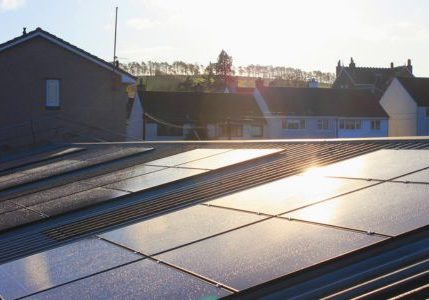
Ramsay Ladders, the long-established family-run manufacturer based in Forfar, has taken a major step in future-proofing its operations with the installation of a solar PV system delivered by Forster Group.
The project forms part of the company’s long-term plans to reduce its carbon footprint, strengthen energy resilience and support the continued modernisation of its manufacturing facilities.
Founded in 1771, Ramsay Ladders has evolved from producing weavers’ reeds and combs for local factories to becoming one of the UK’s most trusted suppliers of ladders, steps and bespoke access solutions. Today, most of its products are manufactured on-site by a highly skilled workforce, serving a wide range of industries that all share a common challenge: safe and reliable access for working at height.
Matthew Lowson, finance manager at Ramsay Ladders, said: “We’ve been focusing on modernising our business over the last few years, making our operations more efficient while also future-proofing our factory for the next stage of growth.
“The introduction of new technology, such as our Computer Numerical Control (CNC) machining centre in 2021, has significantly increased our energy demands. With further machinery upgrades planned over the next five years, we recognised the need to invest in a more sustainable and cost-efficient energy solution.”
The newly installed 36 kWp rooftop Solar PV system comprises high-efficiency panels designed to reduce operational costs and carbon emissions. It is projected to generate approximately 29,450 kWh of clean energy annually, with estimated first-year CO₂ savings of 5,890 kg, and with the system expected to pay for itself within seven years, all future electricity generated will enable the business to benefit from free, clean energy for the remainder of the systems lifetime.
The installation was supported via the Angus Innovation and Growth Business Grant, funded by the UK Government’s Shared Prosperity Fund.
The Solar PV system was installed by Forster Group, Scotland’s largest integrated roofing and solar provider, recognised for its extensive experience across agricultural, commercial and public-sector projects. Ramsay Ladders praised the team for delivering a smooth and efficient installation process.
Matthew continued: “Our preference was always to find a local partner for this project, and we would give Forster five stars from the word go. We worked closely with the team to carefully plan the installation, making sure it had as little impact on our manufacturing operations as possible.
“The team worked extremely hard to come up with effective solutions. Scaffolding was positioned to keep materials flowing in and out of storage, and the only period of electrical downtime was scheduled during the factory lunch break.
“We would not hesitate to recommend Forster Group to anyone considering a Solar PV installation. The team has been knowledgeable, efficient and reliable throughout. We were blown away by the fast turnaround once the project was approved and further impressed by how smoothly the installation was delivered. The whole team has been a credit to Forster Group.”
Looking ahead, the new Solar PV system is expected to support long-term business growth by reducing operational costs and strengthening energy resilience, while also contributing to Ramsay Ladders’ carbon-reduction goals.
John Forster, chair and founder of Forster Group, added: “The benefits of integrating solar energy into businesses go well beyond cost savings. It’s a crucial step toward long-term sustainability and resilience.
“In today’s world of increasingly unpredictable energy markets, Scotland’s business community has a real opportunity to lead the way in decentralised, sustainable energy generation. Technology is no longer the limiting factor; the challenge now lies in improving awareness, easing grid access and ensuring consistent policy support.”
Featured in The Herald
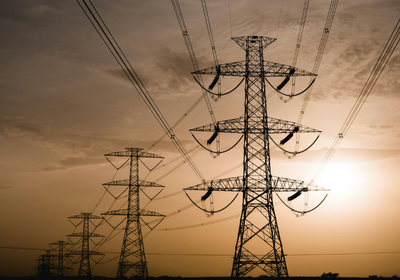
The UK’s energy transition is in a precarious position and investors know it.
Seagreen, Scotland’s largest offshore wind farm, was recently revealed to have been paid to switch off more than 70% of the time. In the last financial year, £2.7 billion in constraint payments were made by the national grid, money paid to generators not to generate. Why? Because we lack the infrastructure to move and store clean energy.
This isn’t just an engineering oversight. It’s a strategic failure and it's costing investor confidence, clean energy and momentum towards net zero.
At the centre of the issue is storage. The grid is fundamentally unbalanced and heavily reliant on wind without the flexibility to capture and shift energy when it’s not needed. That’s why batteries – at domestic and industrial scale – must sit at the heart of UK energy policy and infrastructure planning. But they don’t.
The Government’s new Industrial Strategy highlights this disconnect. It promises cheaper energy for 7,000 businesses but lacks a serious plan for infrastructure. It fails to link growing solar and battery retrofitting to the Future Homes Standard or map out evolving Scottish Home Standards. It promises, but it doesn’t plan.
Energy storage isn’t optional, it’s essential. After more than 30 years in roofing and renewables, I’ve seen how solar can transform how homes, farms and businesses use energy. Everyone should be able to generate, store, sell and buy energy at the right time and at the right price.
Yet homes are still built like this future doesn’t exist. Why aren’t we mandating cabling for EVs, solar PV and battery-ready infrastructure in new homes, knowing they’ll last over 50 years? A decade on from the founding of Solar Energy Scotland, we still have no national solar strategy. We are falling behind Europe and it shows.
Other countries are acting. The EU is considering restricting cross-border energy sales to keep its grid balanced. Scotland hosts most of the UK’s proposed pumped hydro sites, yet none are under construction. The opportunity is there; we just lack joined-up thinking.
Instead of storing surplus energy, we pay wind farms to shut down. We could be pumping it into batteries, feeding it into hydro schemes and enabling local users to consume it when demand is high. The technology exists. What’s missing is policy alignment and investment certainty.
And investors are noticing. The lukewarm response to the Crown Estate’s seabed leasing round off Cornwall is a clear signal that confidence is slipping. Investment requires clarity, consistency and cohesion, not contradiction.
Solar, by contrast, is ready. It’s fast to install, cost-effective and, when combined with batteries, is a reliable source of local clean power. For many farms and homeowners, solar is a crop they can grow, store and sell. But the system puts up barriers where there should be incentives.
The shift from fossil fuels was always inevitable. But without storage, without integration and without a proper plan, it won’t be affordable or investable.
If we’re serious about a clean, balanced energy future, we must stop treating storage as an afterthought. Without it, there is no strategy.
Featured in The Scottish Farmer
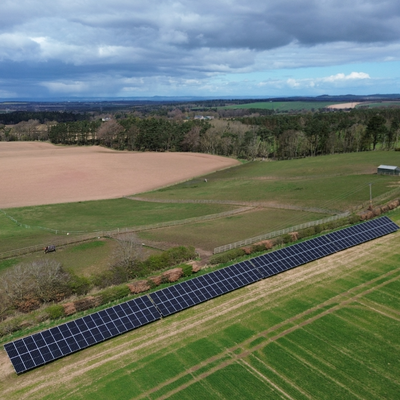
Humbie Farm is a vast 120-acre arable farm situated in the picturesque West Lothian countryside. The farm partnered with Forster Group in 2023 to install a 72.72kWp ground-mounted solar PV system, combined with 146nr JA Solar 505Wp modules and a 1nr Fronius Tauro Inverter.
Since the installation, Humbie Farm has significantly reduced its dependency on the national grid, successfully bucking the trend of soaring energy prices. The farm has even been able to turn sunny days into profit by selling excess energy back to the grid.
Why Solar?
While Humbie Farm primarily focuses on arable farming, the energy demands of the farmhouse are considerable due to the use of an electric ground source heat pump, an AGA cooker and two electric vehicles. Frustrated by the rising energy costs in the UK and concerned about long-term market volatility, farm owner Andrew Bayne-Jardine decided it was time to take control of the situation.
“Solar was something we’d been thinking about for a while,” Andrew said. “But the spiralling costs of electricity were the final push. I couldn’t see prices falling anytime soon, and solar offered a practical, sustainable solution.”
Installing solar panels allowed the farm to dramatically cut energy costs, reduce its reliance on the national grid and generate clean, renewable energy on-site. With the added benefit of selling excess energy back to the grid, the system also created an opportunity for long-term financial return.
Installation
Andrew approached Forster Group for expert advice, and the process quickly moved from concept to installation.
“From day one, the Forster Group team were friendly, professional and enthusiastic,”
Andrew noted. “Despite our rural location and how exposed we are to the elements, they delivered a robust solution tailored to our environment.”
The solar frames were drilled deep into the ground and built to last. That resilience was tested earlier this year when 100mph winds battered the region. Thanks to the high-quality materials and meticulous construction, the panels remained completely intact - a testament to the system’s durability.
Impact
Since installation, the results have exceeded expectations. The system is outperforming projections, and Andrew has secured a favourable contract for exporting excess power. The energy generated comfortably covers the household’s spring and summer demand, with surplus credit offsetting lower output in the winter months.
Thanks to the size of the installation at Humbie Farm, the system has the potential to generate up to £12,000 per year in income from selling electricity back to the grid.
“We’ve only had a couple of small electricity bills during winter,” Andrew shared. “I used to worry about our energy bills constantly - now I have another reason to celebrate when the sun shines on Humbie Farm. It’s effortless income.”
Andrew is already expanding the system’s functionality. An immersion rod has been added to direct surplus energy to the water buffer tank, reducing the reliance on the ageing heat pump. He’s also exploring battery storage options and emerging vehicle-to-house technology to move toward potential off-grid capability.
“If prices stay high, I’m ready to invest in a second system to power another steading and a biomass heating network,” he said. “The technology’s evolving fast, and I want the farm to stay ahead.”
“Solar is so much more affordable now than it was a decade ago,” Andrew concluded. “The payback time is reasonable, and with the right guidance, like I had from Forster, the installation is seamless. If you’ve got the roof space or land, it’s a no-brainer.”
Featured in The Scotsman

The Spanish blackout shows what can happen when building critical infrastucture is neglected, writes John Forster
It's been nearly two weeks since Spain’s national grid faltered – plunging parts of the Iberian Peninsula into chaos and dragging Portugal with it. The initial response, as ever, was to look for someone to blame. Hackers? Foreign powers? But there was no hostile actor behind the failure. This was a system buckling under the strain of its own transition.
It’s a stark reminder: as we rush to decarbonise, the energy transition is becoming increasingly stretched – and under strain is when things break.Since that incident, the headlines have kept coming. Just last week, Drax announced it was pausing the long-anticipated expansion of its hydroelectric site at Ben Cruachan in Argyll, citing uncertainty around government support. Around the same time, Ørsted confirmed it would shelve a major phase of its Hornsea offshore wind development. Both projects would have provided exactly the kind of clean, flexible power we need to replace fossil fuels and stabilise the grid.
Yet while critical infrastructure is being mothballed, the pressure on the grid is only growing. In recent days, the Scottish National Investment Bank confirmed it will lend £600 million to ScottishPower to upgrade connections between Scotland and England – an overdue investment to enable large-scale power movement across the UK. That’s welcome news, and a sign that we’re finally starting to address one of the key weaknesses exposed by events in Spain: the ability to move energy quickly and reliably to where it’s needed most.
But these contradictions – progress in one area, stalling in another – are what make this transition so precarious. We are adding renewables rapidly, but not always with the supporting storage or network infrastructure in place. When the wind doesn’t blow or the sun doesn’t shine, we fall back on an increasingly thin safety net.
I’ve worked in the roofing and renewables sector for over 30 years, and the last 14 at the intersection of solar and battery storage. I’ve long believed that storage – both fast-responding systems like lithium-ion batteries and long-duration solutions like pumped hydro – is the missing link in our energy future. Events like the Iberian blackout only strengthens that view.
pain’s grid collapsed because of a sudden shortfall in renewable generation and a lack of flexibility to compensate. It wasn’t a cyberattack, or extreme weather. It was a foreseeable result of ambition not matched by resilience. Spanish Prime Minister, Pedro Sanchez, has promised it won’t happen again and that it won’t diminish the country’s commitment to renewable energy. But with major projects being put on pause across Europe, can we really be confident?
Closer to home, the irony is that Scotland already hosts nine of the UK’s 11 proposed pumped hydro sites – proven infrastructure that could play a central role in balancing our grid. Yet none are under construction. The case for pumped storage is overwhelming, but progress is slow. Market frameworks haven’t caught up. And while policymakers debate, investment is hesitating.
At the other end of the scale, we’re seeing farmers, landowners and businesses across Scotland installing solar and battery storage systems – not just to cut costs, but to take control of their energy futures, while contributing to ours.
The question we should all be asking is: what will this uncertainty do to energy prices? For households and businesses alike, volatility is the enemy – and without a stable, well-integrated system behind our net zero ambitions, we risk more than just blackouts. We risk public confidence.
The energy transition isn’t just a matter of replacing coal with solar or wind. It’s a wholesale redesign of how we produce, store, move and use energy. That’s a complex process – and it’s one we need to get right.
Because if Spain was a warning, the question is not whether it could happen here. It’s whether we’ll be ready when it does.
Featured in Energy Voice
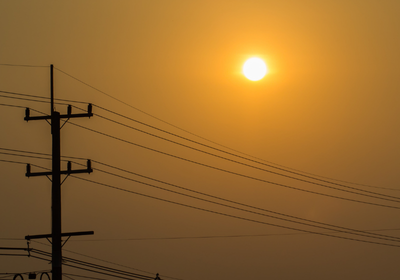
Just over a week ago, Spain’s electricity grid faltered. Portugal quickly followed. In the media, speculation swirled: Was it a cyber attack? Sabotage? Hackers?
No. Investigations continue, yet the truth looks simpler and far more worrying: this was a failure of energy planning.
The power outage that took down two national grids wasn’t caused by some hostile force – it was caused by a sudden drop in renewable energy output and a failure to back it up with sufficient storage. This wasn’t a freak event. It was entirely foreseeable. And unless Scotland, and the wider UK, get serious about balancing its own energy system, we’re next.
I’ve spent over 30 years in the roofing and renewable energy sector, and I’ve never seen a more urgent need for honest, practical thinking about our energy future. We’re electrifying more of our economy – transport, homes, industry. But we’re not updating our energy infrastructure with the same urgency or realism.
The fundamental truth is this: renewables are intermittent, and we ignore that at our peril. When the sun disappears behind the clouds, solar output drops in seconds. When the wind dies down – as it often does during periods of high pressure – turbines stop turning.
In Spain, this happened in real time, and without a balanced backup in place, the system couldn’t cope. The frequency of the grid dipped below its 50 Hz threshold, and everything dropped or stopped.
This concept – grid frequency and system “balance” – may sound technical, but it’s absolutely central to keeping the lights on. It’s not enough to simply generate clean electricity. We must balance the generating technologies we deploy, and we need to balance generation with storage. Without this, the more we depend on renewables, the more fragile our system becomes.
Pumped hydro
In Scotland, we’re at a crossroads. We’re rich in wind and increasingly rich in solar. But our national approach lacks depth. We’ve been piling investment into wind power without complementing it with enough solar or sufficient storage. It’s like baking a cake and forgetting the eggs – you’re not going to like the result.
Thankfully, the solutions already exist. Battery storage, for one, is fast and flexible, and it can be deployed for homes and industry to make energy more affordable, and at grid scale. It’s a critical piece of the puzzle. But for truly seasonal storage – the ability to save vast amounts of power from windy or sunny days and release it during darker, calmer periods – pumped hydro is unmatched.
Scotland is uniquely placed here. Of the 11 pumped hydro projects in development across the UK, nine are in Scotland. Sites like Cruachan and Loch Ness could become the backbone of our energy resilience – storing clean energy when there’s too much and releasing it when we need it most.
But let’s be clear: none of these projects are under construction. They’re stuck in planning, in policy review, in bureaucratic inertia. And all the while, our national base load is shrinking – coal gone, nuclear retiring, gas under pressure. Without new thinking and faster action, we are literally risking blackout.
We’ve already had some close calls. In 2022, during a 34°C heatwave in southern UK, demand surged, wind speed dropped, and we came within a whisker of a system failure. The UK had to import electricity at almost £10 per kilowatt hour to keep the grid running. That’s not a strategy.
Spain’s blackout wasn’t a cyber-attack. It was a preview. And if we don’t get our energy mix right – with proper storage, grid investment and a smart balance between wind and solar – we’ll be next on the front pages.
Scotland has the tools, the geography and the engineering know-how. What we need now is political will, joined-up thinking and a proper recipe for energy security in a renewable future.
This isn’t simply about keeping the lights on. It’s about building a nation that’s ready for the future – and resilient enough to power through it.
Featured in Project Scotland
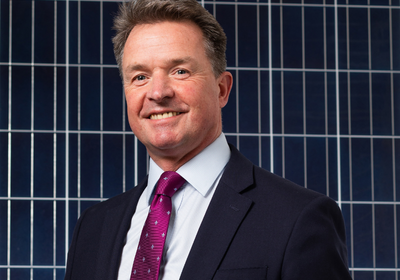
John Forster, chair of Forster Group, believes the renewable energy sector, particularly solar and battery storage, is poised for significant growth.
The closure of the UK’s last coal-fired power station in September 2024 marked a pivotal shift towards cleaner energy. The Labour government’s move to nationalise the National Grid as the National Energy Systems Operator (NESO) is a crucial step in prioritising renewable energy. We foresee a rise in smart energy systems, integrating large-scale and microgeneration of solar power with advanced storage solutions. This transition is vital for meeting climate targets and ensuring energy security.
“The built environment faces challenges in retrofitting and constructing energy-efficient homes, compounded by skills shortages and high costs. Collaboration between national and devolved governments is therefore essential. At Forster Group, we are dedicated to leading this transition, providing integrated solutions that support a sustainable and resilient future.
Tel: 01356628560
Email: enquiries@forstergroup.co.uk
Sectors | About Us | Privacy Policy
© 2024 Forster Group. All Rights Reserved.