Call us now on 01356628560
Call us now on 01356628560
Middleton of Rora has been farmed by the same family for more than 300 years. As demand for Rora Dairy’s yoghurt has grown, so has the farm’s need for power.
years of family farming
ground mount solar installed
generated yearly at Rora Dairy
yearly CO₂ savings
Middleton of Rora is a long-established family farm near Peterhead, run by Jane and Bruce Mackie. It supports a 250-strong dairy herd alongside arable crops and has stayed in the same family for generations.
In 2017, the couple launched Rora Dairy, producing simple, pure Scottish yoghurts from the milk of their own free-roaming cows. The brand has grown steadily and electricity demand has grown with it, driven by modern robotic milking systems, refrigeration, processing and packaging. To meet this sustainably, Rora Dairy turned to Forster Group to design a renewable energy solution that would protect the landscape while delivering reliable, low-carbon power.
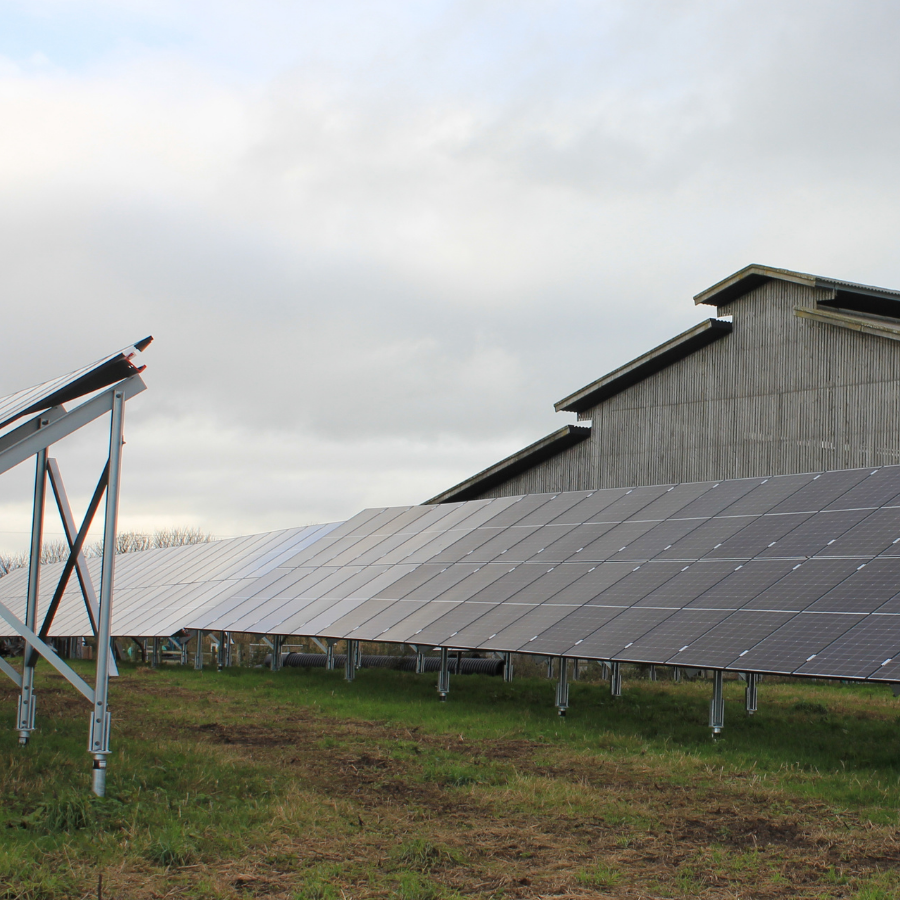
Forster Group worked closely with Rora Dairy to design a system that met the farm’s sustainability goals and the practical demands of a working dairy. The goal was to protect the landscape while delivering dependable, low-carbon power.
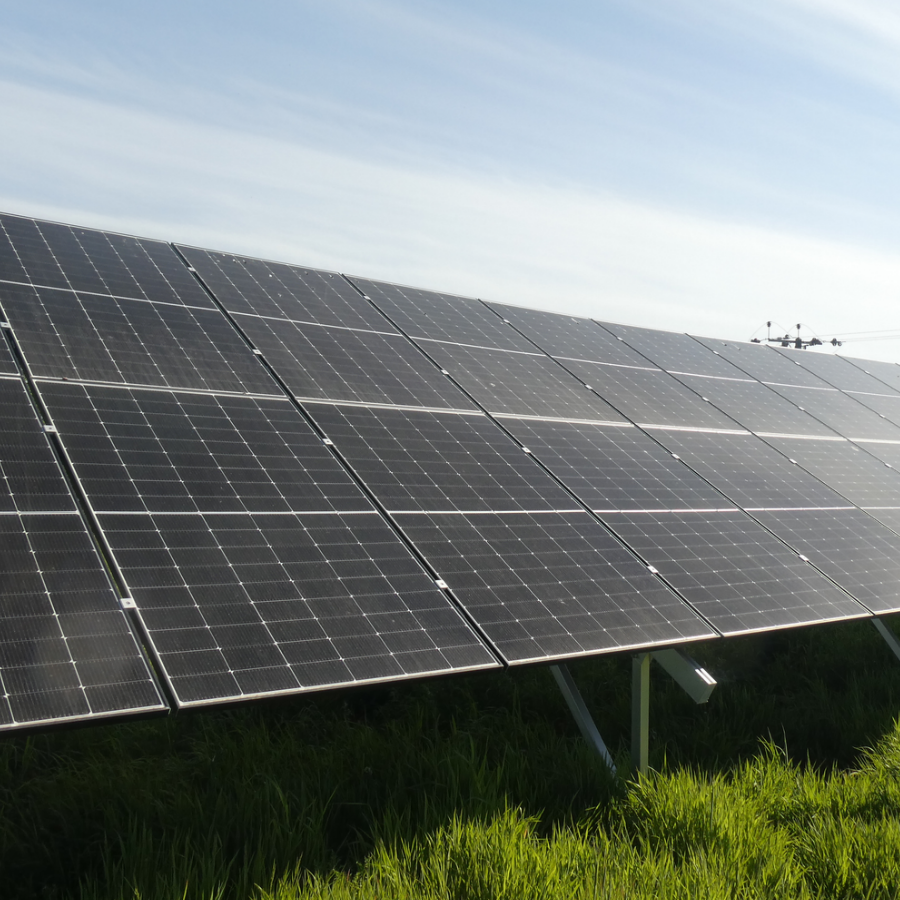
The result is a 130kWp ground-mounted array paired with 56kWh battery energy storage system, positioned to sit sensitively within its rural surroundings and to complement the existing farm buildings. Its layout was planned to make the most of on-site generation, and the system has been designed to take battery storage in future.

Self-consumption of 75%, with excess energy exported back to the grid.
The array now generates a significant proportion of the farm’s electricity on site. It powers milking, cooling, yoghurt production and storage with any excess exported back to the grid. With battery storage in place, Rora Dairy can make better use of its own power and the project remains on track for an overall payback of four to five years.
That leaves the farm well placed to keep growing while holding energy costs and emissions steady.
Forster Group can look at how your farm uses power and design a system around it.
St Andrews Coach Houses offers luxury self-catering lodges on Priorletham Farm. By generating its own power with a 38kWp ground-mounted solar array, the business is showing what sustainable rural tourism can look like in practice.
ground-mount array
annual energy generation
CO₂ saved each year
projected payback
St Andrews Coach Houses is a collection of luxury self-catering lodges set in the countryside outside St Andrews. The lodges sit on Priorletham Farm, a fully operational farm that the Picken family has managed for the last century.
Running holiday accommodation alongside a working farm means high energy use, and the family became increasingly aware of both the environmental impact and the rising cost. They began looking at more sustainable ways to power the business and reduce their reliance on the national grid. Solar suited them as a long-term investment, in keeping with their commitment to responsible rural tourism.
"As a family run business with strong farming roots, we’ve always been very conscious of our environmental impact. Like many others, we’ve seen energy costs rise. Our goal when installing the solar panels was twofold: to reduce our reliance on the national grid and to provide our guests with an experience that truly reflects our eco-conscious values."
-Claire Picken, Farm Manager, St Andrews Coach Houses
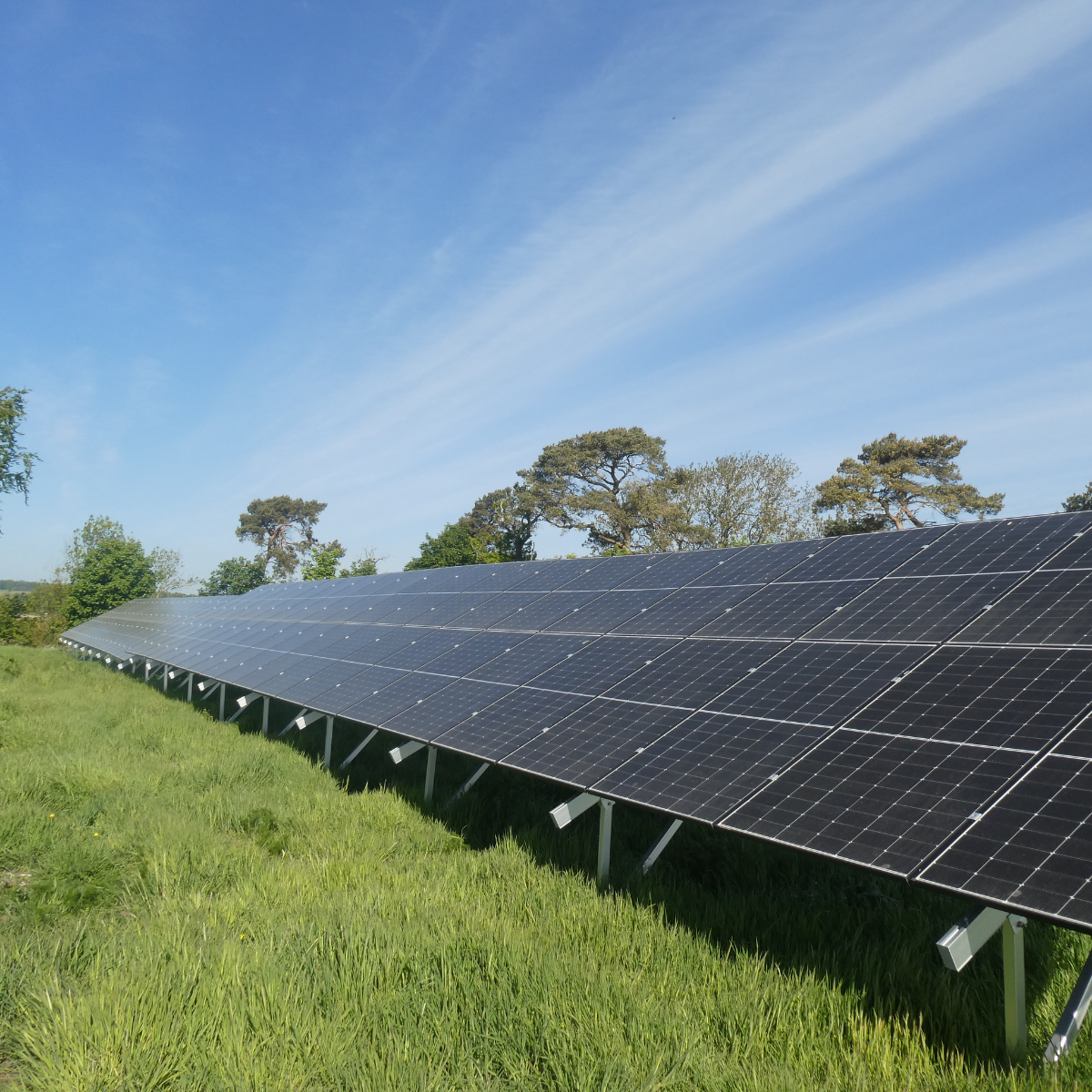
Forster Group worked closely with the Picken family to design a bespoke ground-mounted system that could power both the working farm and the luxury lodges efficiently. It sits comfortably within the rural setting, so the site keeps its visual appeal, while delivering long-term carbon reductions and operational savings that support the business as it grow
The installation was delivered with minimal disruption, which mattered on a site where the farm and the guest retreat both keep running.
"We had a great experience working with Forster Group. They were professional, informative and flexible, which was essential for balancing a major installation with the day-to-day running of a working farm and luxury retreat."
-Claire Picken, Manager, St Andrews Coach Houses
Estimated long-term saving of £324,943, with carbon savings of over 461,000kg across 30 years.
The system now powers a significant portion of the day-to-day running of the farm and lodges. The Pickens have already seen a real difference in their energy costs, and with the peak season under way, the benefit will be felt across the business. The estimated long-term saving is £324,943.
The system also gives the family room to grow. Additions such as outdoor saunas are planned and the solar supply will help meet that extra demand.
"Since the installation, we've seen a real difference in our energy costs. It also gives us credibility. We can show our guests that sustainability isn’t just a marketing line. We live and breathe it. As more tourists actively seek out eco-friendly getaways, this is a huge advantage for us."
-Claire Picken, Manager, St Andrews Coach Houses
Thinking about solar for your farm or rural business? Forster group can look at how your site used power and deign a system around it. Farms can meet their own energy needs, contribute clean power back to the grid, and protect themselves from future energy price shocks.
Since installing a ground-mounted solar system, Humbie Mains Farm has significantly reduced its reliance on the national grid. It has also secured a contract to sell its surplus power back, so sunny days now bring in income.
ground mount solar
annual energy generation
CO₂ saved each year
potential annual revenue from grid export
Humbie Mains is a traditional arable farm in West Lothian, run by landowner Andrew Bayne-Jardine. Its energy demand is substantial, from the daily work of the farm to a household that runs a ground source heat pump, an AGA and two electric vehicles.
Andrew had thought about solar for some time. As electricity prices climbed and showed no sign of easing, he approached Forster Group in 2023.
"Solar was something we’d been thinking about for a while, but the spiralling costs of electricity were the final push. I couldn’t see prices falling anytime soon and solar offered a practical, sustainable solution."
-Andrew Bayne-Jardine, Landowner
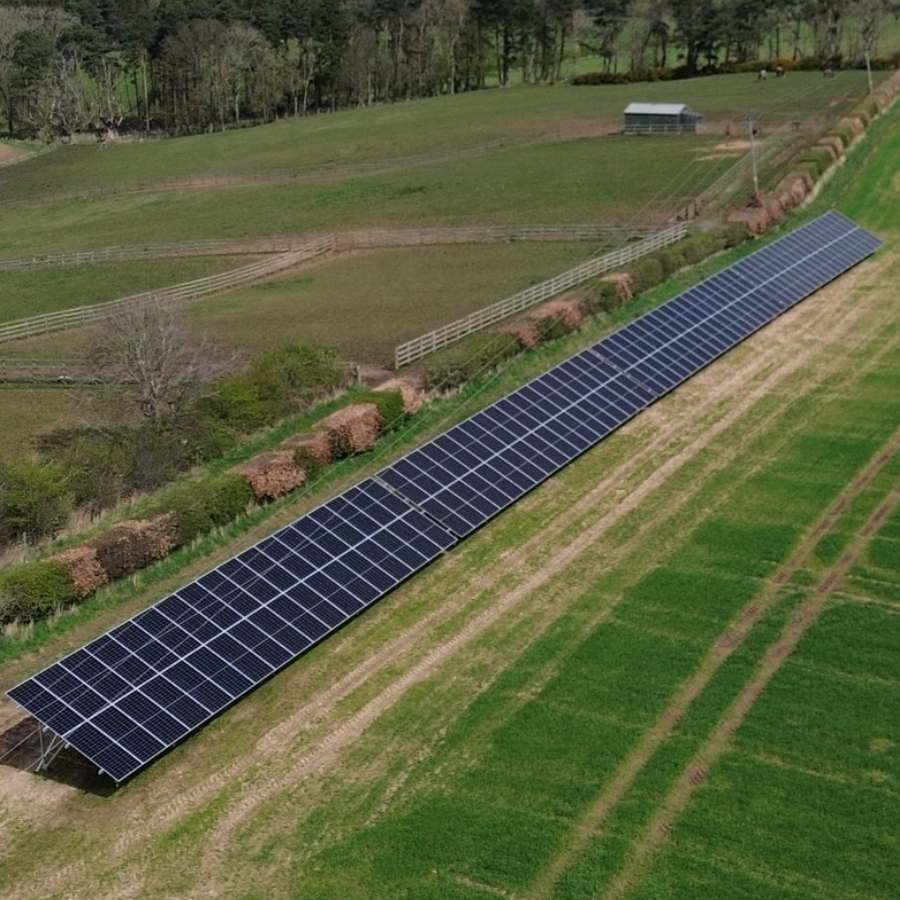
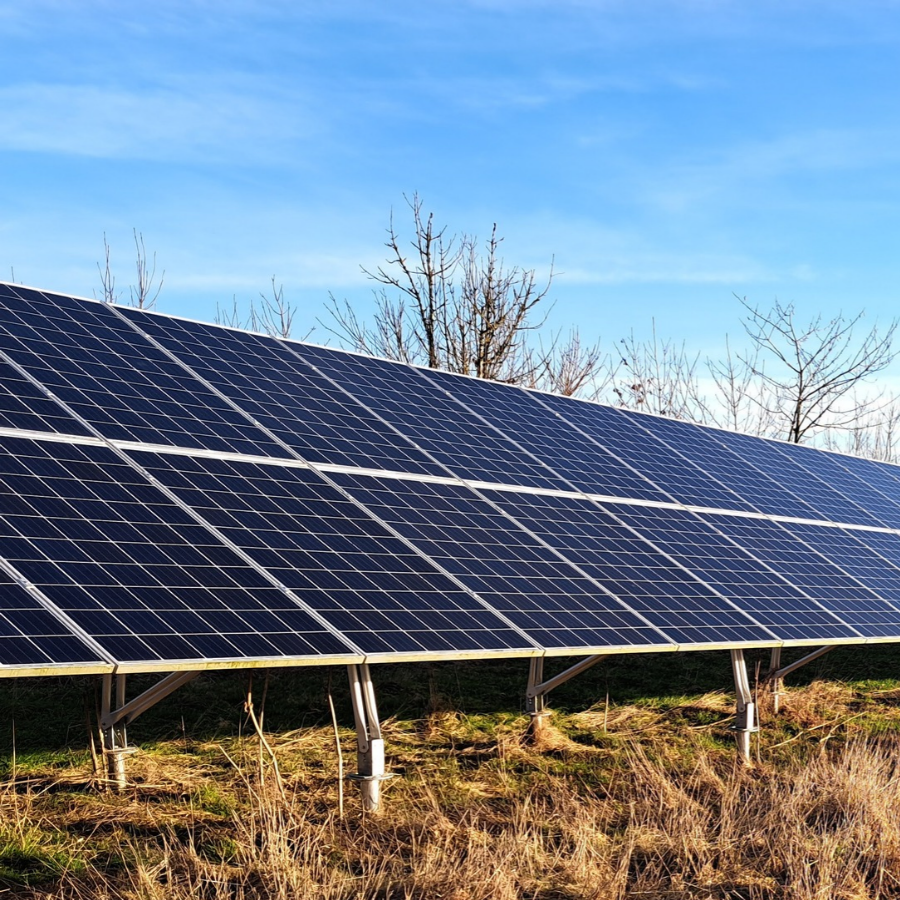
Forster Group drew on decades of experience in agricultural and commercial installations to design a 72.72kWp ground-mounted solar PV system around Humbie Mains’ daily energy needs. The design also allows for the farm’s future growth.
Surplus power is sold back to the grid under a contract Andrew has secured.
"We’ve only had a couple of small electricity bills during winter. I used to worry about our energy bills constantly - now I have another reason to celebrate when the sun shines on Humbie Farm. It’s effortless income."
-Andrew Bayne-Jardine, Landowner
The results have exceeded expectations. The system is outperforming its projections and has significantly reduced the farm’s reliance on the national grid. It comfortably covers the household’s demand through spring and summer, and surplus credit helps offset the lower output over winter.
Andrew has also secured a contract to export surplus power. Given the size of the installation, Humbie Mains has the potential to earn up to £12,000 a year from selling electricity back to the grid.
Forster Group can look at how your farm uses power and design a system around it.
The Robertsons have been farming 700-acre Cookston Farm in Eassie for over 70 years. Now in the hands of the 3rd and 4th generation. David Robertson, along with his brother, father and mother, run the farm together.
Potatoes, grown over 175 acres are Cookston Farm’s main crop — at any one time, approximately 3,500 tonnes of potatoes are stored in refrigerated cold stores, which require efficient energy to maintain a constant temperature of approximately 2.5OC.
We were a bit luckier than some our neighbours as our electricity contract was fixed at 26 pence per unit. But because further energy price increases are inevitable, it made perfect financial sense for us to investigate how to generate our own power from solar panels.
As a farmer, it’s important for me and for my customers that we have sustainable farming practices in place: renewable solar energy is an integral part of achieving that.
The installation was completed in March 2023 and now realise, we should have installed them a long time ago.
We contacted two companies to scope out our requirements and to provide quotes. We went with Forster primarily because:
We have a 68kWp roof-mounted system comprising 168 panels over four arrays.
Forster’s design engineers were very professional, and took time to understand our energy requirements and what we needed to achieve from our investment in solar. Instead of trying to sell us an off-the-shelf system, they tailored one to our particular requirements.
The system is configured so that it can easily be scaled up in the future to include a battery. However, Forster advised me to allow the system to bed in for a full year before considering any additional investment. This will allow me to make an informed decision on whether battery storage will meet my requirements.
Actual installation on the roof of the cold stores was very straightforward. It probably took two or three days over the course of two weeks for the job to be completed. The Forster team did everything from carrying out the initial site survey to design and installation. Importantly, they are very tidy workers — never any mess or clutter lying around during or after installation, which is pretty important on a farm like ours.
“The monitoring app that Forster provided is brilliant as it lets us see in real time the energy we are generating, shows us our consumption and the amount that is being exported back to the grid.”
With the panels we are able to use about 71% of our total generation. Currently we export about 29% of what we generate back to the grid.
To save more money, we time getting the loads ready for pick-up while the sun is shining. That way, we can use electricity generated from our solar panels to return the store temperature to 2.5OC when the doors are closed after drop-off.
My solar PV system was installed in March 2023 and already I am seeing a 40% reduction in my energy and my projected return on investment is 20%.
Because we were lucky enough to be on a low tariff, the payback period for our investment is around six years, which is a little longer than some of our neighbours, who, because they are on much higher tariffs, (some as much as 82p/kw) have shorter payback periods of about two years.
After six years, I can count the electricity generated from my solar panels as free.
Angus arable and potato farmers Ralph and Gary Smith of Bolshan Farm, Friockheim installed a 192 panel, 49.92kWp array on the south facing roof of one of his storage sheds. The system is providing power for potato cold storage, grain drying as well as general farm supply. The Smiths are using more than 50% of the 44,000kWh of electricity generated by his solar array. Therefore the system is set to payback within five years, and reap a 24% annual return on Gary’s investment for the next twenty years.
Fife based farmer owned co-operative East of Scotland Growers installed a 120 panel solar array on the south facing roof of their cold storage unit in Cupar. The 30kWp array provides power for temperature controlled storage of broccoli and cauliflower as well as for general office supply. The co-operative are using over 50% of the 25,500kWh of electricity generated by the system which will result in an investment payback within 6 years, and an annual return of 21% for twenty years.
Farmers have long been known for it, but Angus based farmer Graeme Jarron of Hatton of Ogilvy has taken diversification to a new level, by producing his own vodka label, Ogilvy Spirits, from his potato crop. Earlier in the year Graeme, a tenant farmer of Strathmore Estates, secured planning permission to proceed with his plan to set-up the micro-distillery in a purpose built shed.
To support the increased power requirements of operating the new distillery and the continued running of the farm Graeme has installed a PV system, which allows him to produce his own supply of clean electricity.
A 30kWp, 120 panel array was installed by Scotland’s leading agricultural roof-top PV installer Forster Energy on the grain store roof adjacent to the distillery.
The first few months, since the installation was completed at the end of July, show the system outperforming projections by over 6%.
Graeme’s cousins, George and Scott Jarron of ‘Scott Brothers Butchers’, have also now installed a 22kWp PV system on the roof of their main store and processing facility in Dundee.
The continuing rise in the cost of energy has impacted everybody, but it presents a particular challenge to farmers with a high electricity demand. The Carnegies, widely known for supplying cultivation, harvesting, spraying and lime spreading contract services to farmers across the Mearns, recognised how PV could help them counter this challenge and allow them to take control of their own energy costs.
East coast farmers and contractors David, Brian and Derek Carnegie of D.M. Carnegie have just had a 50kWp PV array installed by Scotland’s leading agricultural roof-top solar PV supplier, Forster Energy on the roof of a grain store at their Steelstrath premises near Laurencekirk? .
The initial 200 panel 50kWp roof-top solar PV array was installed under permitted development works. Subject to planning approval the Carnegies are looking to bolt on to the same composite roof a further 50kWp array. They are also in the process of installing a 500kW wind turbine which will further enhance their green credentials.
It is expected that the Carnegies system will have paid for itself within six years and yield a 20 year annual return on investment of an impressive 22%.
East Hills Farm is a potato farm situated in an idyllic location in central Angus. The requirement for cold storage to preserve the potato crop results in a high electricity usage. With their electricity consumption rising during the longest days of the year (the optimum period for solar), energy generation through solar PV provided the perfect match to meet the farm’s electricity profile.
Following consultation (involving discussion on the electricity profile) and a thorough feasibility assessment of the farm by Forster’s technical team, the Cowan’s agreed to the installation of a 38kWp roof mounted and 112kWp free standing installation on otherwise unused land.
The composite roof mounted array involved the installation of 152 250W Canadian Solar panels. Additionally 448 TRINA 250W panels were installed on the ground. Following a full assessment of the ground structure the Renusol ballasted ConSole mounting system was selected to counter issues created by an inherently rocky site.
The 150kWp system is projected to provide a payback (including FIT & Export payments and energy saving) within seven years and generate a total profit/saving (over 20 years) of £514,000.
The Cowan’s have benefited through gaining greater control of their energy costs, creating a good yield from an otherwise unproductive piece of land, whilst generating a twenty year income stream through the feed in tariff and reducing the farm’s carbon footprint.
Pitlivie Farm, near Carnoustie in Angus is the site of one of Scotland largest agricultural roof mounted PV installations.
The farm owned and managed by Hugh Niven grows and supplies potatoes for distributor Albert Bartlett. With a high energy requirement from long term storage of produce, rising electricity costs have led Hugh to explore ways to gain greater control of the farm’s energy costs.
Awareness of other PV installations completed locally provided us with the opportunity to talk to Hugh about the energy profile of his farm and present the key benefits of generating electricity through solar PV.
The electricity supply at Pitlivie consists of two meter points and two transformers, supplying electricity for a variety of farm equipment across the site. We took the decision to split the array between the two transformers allowing Hugh to maximise his onsite usage. An 80kWp array feeds one of the transformers, generating power for the farm’s grain drier, washer plant and one of the farm’s cold storage units. A further 160kWp array feeds the other transformer, powering the potato grader and multiple remaining cold storage units.
The decision was made to initially install a 50kWp array under permitted development works. Once planning permission was received the full 240kWp multiple roof array was completed. The system was spread across four roofs. The nine hundred and sixty panel array was fixed directly to the roof purlins and is supported by nine PowerOne inverters and two G59 relays.
In the first few weeks of production the system is already outperforming our projections. At this pace the system will have paid for itself in less than six years, generating a total Feed In Tariff income and energy cost saving for the Niven’s of £737,000 over 20 years. In addition to the financial benefits, the PV system is significantly reducing the farm’s carbon emissions, making it more attractive to their supply chain.
In the heart of Strathmore the McLaren family, are reaping the rewards of a solar power project. With a maximum output of 176kWp it is the match of many wind turbine systems and a very good fit for the broccoli and potato enterprises on the farm.
The McLaren’s main electricity use at Cronan is tied to cold storage for 7,500 tonnes of potatoes and chilling of between 15 and 30 tonnes per day of broccoli. Aligning high-power generation with requirements for high power demand was therefore a key objective. As the cold store power demand is highest during periods of sunny weather and the broccoli chilling harvest period is spread over the months when solar radiation is highest, solar PV provides the ideal solution. The harvested broccoli which is marketed through East of Scotland Growers goes to supermarket buyers who appreciate the carbon savings achieved by using renewable energy.
The mounting system for the 720 panel array was fixed directly to the building’s purlins. Whilst the panels might look as though they add to the roof loading, at 15 tonnes (in total) it is relatively insignificant compared with a snow loading over the same area of more than 200 tonnes. To supplement the solar PV system the McLarens also installed a sophisticated control system which monitors temperatures from the four cold stores on site and works out which areas require cooling and when. This maximises the use of solar generated electricity during the day, and ensures that as much of the bought in electricity as possible is on the cheaper night time tariff.
Pay-back on the project is projected to be within seven years, but in the first few months of generation the electricity output was 3% ahead of budget.
Tel: 01356628560
Email: enquiries@forstergroup.co.uk
Sectors | About Us | Privacy Policy
© 2024 Forster Group. All Rights Reserved.